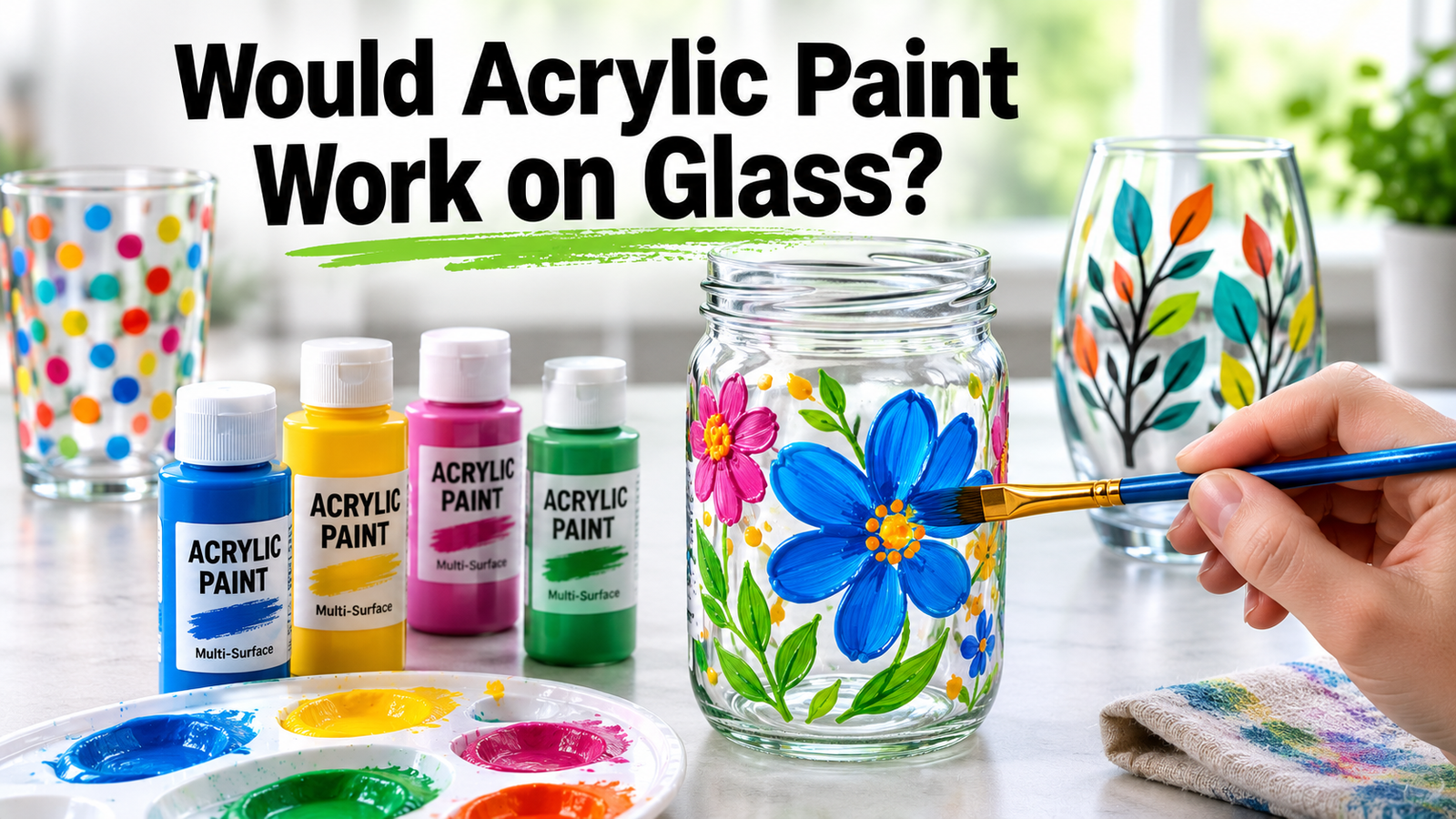

If you’re standing in front of a mason jar, a wine glass, or an old window pane wondering, “would acrylic paint work on glass?“—the short answer is yes, but with a catch. Acrylic paint can absolutely be used on glass, but glass is a non-porous, ultra-smooth surface, which means paint doesn’t grip it the way it grips canvas, wood, or paper. Without the right prep and finishing steps, even good-quality acrylic paint can chip, peel, or wash away within days.
- Why Doesn’t Acrylic Paint Stick to Glass Easily?
- Does Acrylic Paint Work on Glass? The Direct Answer
- Which Type of Acrylic Paint Works Best on Glass?
- Is It Safe to Use Painted Glass for Food or Drinks?
- How to Paint Glass with Acrylic Paint: Step-by-Step
- Step 1: Gather Your Supplies
- Step 2: Clean the Glass Thoroughly
- Step 3: Rough Up the Surface (Optional but Recommended)
- Step 4: Apply a Primer (If Using Regular Acrylic)
- Step 5: Paint in Thin Layers
- Step 6: Let the Paint Cure Fully
- Step 7: Seal Your Design
- Step 8: Cure or Bake (If Your Paint Allows It)
- Troubleshooting Common Problems
- Frequently Asked Questions
- Final Thoughts
- Related Articles
The good news is that once you understand why acrylic paint struggles on glass and how to work around it, painting glass becomes a straightforward, budget-friendly craft. This guide walks through the science of why acrylic doesn’t naturally bond to glass, which paint types actually hold up, the exact steps for prepping and sealing your project, and how to avoid the most common mistakes people run into.
Why Doesn’t Acrylic Paint Stick to Glass Easily?
Acrylic paint is designed to bond with porous or slightly textured surfaces. Materials like canvas, wood, and paper have tiny fibers and pores that the paint’s polymer binder can physically grip onto as it dries. Glass has none of that. It’s smooth at a microscopic level, so paint essentially sits on top of the surface instead of bonding into it.
This is also why oils, fingerprints, and dust matter so much when painting glass. Any residue creates an additional barrier between the paint and the surface, making adhesion even weaker. That’s why the answer to “would acrylic paint work on glass” always comes with a follow-up: it depends on your prep work and the type of acrylic you use.
Does Acrylic Paint Work on Glass? The Direct Answer
Yes, acrylic paint works on glass when you:
- Clean and prep the surface properly
- Use a paint formula suited for non-porous surfaces (or add a primer/medium that helps it bond)
- Apply thin, even layers and let them cure fully
- Seal the finished piece to protect it from scratching, moisture, and washing
Skip any of these steps, and you’ll likely see peeling, streaking, or paint that scratches off with a fingernail. Follow them, and acrylic paint on glass can last for years, even with regular handling.
Which Type of Acrylic Paint Works Best on Glass?
Not all acrylic paints perform the same way on glass. Here’s how the main options compare.
| Paint Type | Adhesion on Glass | Durability | Dishwasher-Safe | Best For |
|---|---|---|---|---|
| Regular craft acrylic | Weak without primer | Low–moderate | No | Decorative pieces that won’t be handled often |
| Multi-surface acrylic | Good | Moderate–high | Sometimes (check label) | Vases, jars, picture frames, mixed-media projects |
| Acrylic enamel paint | Very good | High | Often yes, if cured correctly | Mugs, plates, glasses used for display or light use |
| Dedicated glass paint | Best | High | Varies by brand | Windows, ornaments, stained-glass-style effects |
Key takeaway: If your project is purely decorative and won’t be touched or washed much, regular acrylic with a primer and sealant can work fine. If you’re painting something that will be handled, washed, or used for drinks, invest in a multi-surface or enamel acrylic labeled specifically for glass and ceramic.
Is It Safe to Use Painted Glass for Food or Drinks?
This is one of the most overlooked questions in most glass-painting guides, and it matters. Standard craft acrylic paint is not food-safe and should never come into contact with the rim, interior, or any surface that touches your mouth or food. Even paints labeled “non-toxic” refer to safety during handling and drying, not necessarily food contact after curing.
If you want to paint a mug or glass you plan to actually drink from, look specifically for paint labeled food-safe or dishwasher-safe after curing, and follow the manufacturer’s baking instructions exactly. For anything else—decorative jars, vases, window art, ornaments—this isn’t a concern, but it’s worth checking the product label before you start rather than after you’ve finished the piece.
How to Paint Glass with Acrylic Paint: Step-by-Step
Step 1: Gather Your Supplies
You’ll want:
- Isopropyl rubbing alcohol or a vinegar-water solution
- Lint-free cloth
- Fine-grit sandpaper (220–400 grit) or a glass etching medium (optional but recommended)
- Multi-surface or enamel acrylic paint (or regular acrylic plus a bonding primer)
- Soft synthetic brushes, a sponge, or a stencil, depending on your design
- A clear acrylic sealant (spray or brush-on) rated for glass
Step 2: Clean the Glass Thoroughly
Wash the glass with warm, soapy water first to remove surface grime, then wipe it down with rubbing alcohol. This step removes oils and fingerprints that regular soap can leave behind. Let the glass air-dry completely—any moisture trapped under paint can cause bubbling later.
Step 3: Rough Up the Surface (Optional but Recommended)
Lightly sand the area you plan to paint with fine-grit sandpaper, or apply a glass-etching cream. This creates microscopic texture that gives the paint something to physically hold onto, similar to how canvas fibers work. Skip this step if you’re using a paint formulated specifically for smooth, non-porous surfaces and prefer to preserve the glass’s natural shine.
Step 4: Apply a Primer (If Using Regular Acrylic)
If you’re working with standard craft acrylic rather than a multi-surface or glass-specific formula, apply a thin, even coat of bonding primer with a brush or sponge. Let it dry fully—this typically takes 24 to 72 hours depending on humidity and coat thickness. The primer should feel slightly rough, not tacky, before you move on.
Step 5: Paint in Thin Layers
Apply your first coat thinly and evenly. Resist the urge to thin your paint with water, since this weakens the binder and makes adhesion worse, not better. If you need a thinner consistency for detail work, use a clear acrylic pouring medium instead. Let each layer dry completely (usually 20–30 minutes for thin coats) before adding the next.
Step 6: Let the Paint Cure Fully
Painting is finished once the design looks right, but curing takes longer than drying. Most acrylics need 24 to 48 hours to fully cure before handling, and up to a week before regular washing or use. Rushing this step is one of the top reasons painted glass peels prematurely.
Step 7: Seal Your Design
Once fully cured, apply a clear acrylic sealant. Spray sealants tend to go on more evenly than brush-on options, since brushing can leave visible strokes in the topcoat. Apply two to three thin coats, letting each dry for about 15 minutes, in a well-ventilated area. Choose a gloss, satin, or matte finish depending on the look you want.
Step 8: Cure or Bake (If Your Paint Allows It)
Some acrylic enamel and glass paints can be oven-cured for extra durability. Only do this if the product label explicitly says the paint is oven-safe, and follow the manufacturer’s exact temperature and timing instructions. Place the piece in a cold oven, heat gradually, and let it cool inside the oven once finished to prevent cracking from thermal shock.
Troubleshooting Common Problems
Paint is peeling at the edges. This usually means the surface wasn’t cleaned or roughened enough before painting, or the paint layer was too thick. Strip the affected area, re-clean, re-sand lightly, and repaint in thinner coats.
Paint looks streaky on clear glass. This often happens with low-viscosity craft acrylics applied directly to smooth glass. Switch to a multi-surface acrylic, apply a light primer coat first, or use a sponge instead of a brush for more even coverage.
Paint feels tacky days after painting. Humidity, thick application, or insufficient dry time between coats are the usual culprits. Move the piece to a dry, well-ventilated space and give it more time before sealing.
Sealant looks cloudy or uneven. This is typically caused by applying sealant too thickly, in a humid environment, or before the paint has fully cured. Let the paint cure completely, work in a dry space, and apply sealant in thin, even layers.
Frequently Asked Questions
Does acrylic paint wash off glass? Unsealed acrylic paint can wash or scratch off glass, especially with repeated handling or washing. Sealing the design after it cures significantly improves how long it lasts.
Can you paint glass with acrylic paint without primer? Yes, but the results are less durable. Primer or a bonding medium helps the paint grip the smooth surface, so skipping it usually means a shorter lifespan for the design, even with sealant applied.
How long does acrylic paint need to dry on glass before sealing? Most acrylic paint needs 24 to 48 hours to cure fully before sealing, though thicker layers may need longer. Check that the surface feels completely dry and not tacky before applying sealant.
Can you put acrylic-painted glass in the dishwasher? Only if the paint and sealant are both labeled dishwasher-safe after curing. Regular craft acrylic and standard sealants are not dishwasher-safe and should be hand-washed gently, if washed at all.
What’s the difference between acrylic paint and glass paint? Regular acrylic paint is formulated for porous surfaces and needs extra prep and sealing to work on glass. Glass paint is specifically engineered to bond with non-porous, smooth surfaces, often requiring less prep and offering better long-term adhesion.
Can you use acrylic paint on the inside of a glass? Painting the inside of a glass is possible but not recommended for anything that will hold food or drinks, since most acrylic paints and sealants are not food-safe. Reserve inside-of-glass painting for purely decorative pieces, like frosted-effect vases.
Final Thoughts
So, would acrylic paint work on glass? Yes—as long as you respect the fact that glass is a smooth, non-porous surface that needs help holding onto paint. Clean the surface thoroughly, choose a multi-surface or enamel acrylic when durability matters, apply thin layers, give the paint real time to cure, and finish with a proper sealant. Skip the shortcuts, and your painted glass project can hold up for years instead of days.
Ready to start your own glass-painting project? Gather your supplies, prep your surface, and try a small test piece first to get a feel for how your paint and sealant work together before committing to your final design.
Related Articles
Is Acrylic Paint Washable? Complete Guide to Removing It From Any Surface
How Long to Wait Between Coats of Paint: A Complete Guide
What Is Eggshell Paint? A Complete Guide to Finish, Uses, Pros & Cons
Do You Sand Primer Before Painting? A Complete Step-by-Step Guide